Someone Has to Press Record: The Bedroom Archivists Saving West London's Radio History
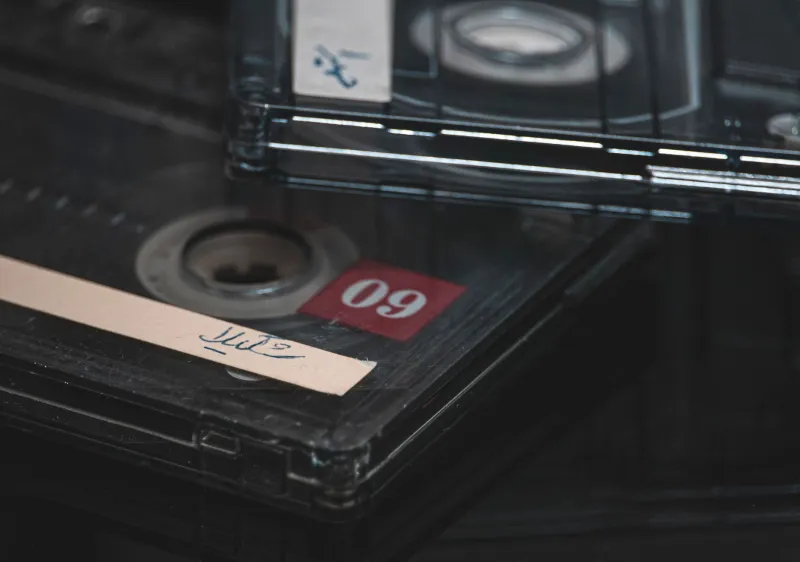
There is a shoebox in a spare room in Hanwell that contains, by rough estimate, forty hours of West London community radio. It is labelled in biro: phone-ins, jingles, that bloke from the market, 2003-ish. The owner, a retired bus driver called Ray, has never listened back to any of it. He just kept pressing record because it seemed rude not to.
Ray is not unusual. He is one of a quiet, scattered network of home archivists across West London who have spent years taping the output of small stations, hospital radio, RSL broadcasts and internet-only shows that were never meant to be kept. Some use cassette decks that smell faintly of hot dust. Others have migrated to minidisc, then to external hard drives, then — reluctantly — to their phones. Together they have built an accidental museum of local sound that no institution asked for and no funding stream currently protects.
The shoebox under the bed
Ask these people why they do it and you rarely get a grand answer. It is usually something closer to instinct. "I just didn't want to miss it," says Priya, who lives off the Uxbridge Road and has been recording a Sunday evening soul show since she was a teenager. "It felt like it was happening once and then gone. Like a conversation you overhear on a bus."
That is the strange thing about community radio. It is intimate, immediate and almost entirely disposable. A phone-in about potholes on the A4020, a dedication to a grandmother in Southall, a jingle recorded by a year six class in Acton — these things matter intensely for the twenty minutes they are on air and then vanish into the ether. Unless somebody, somewhere, has a tape running.
The home archivists are not professionals. They miss beginnings. They catch half a link. They leave the ads in. But that is precisely what makes their collections valuable: they are not curated highlights, they are the texture of the thing. The hiss between the songs. The presenter fumbling a name. The caller who rings back to apologise.
Why bother recording something you can hear once?
The obvious question is why anyone would bother. Most of this material was never designed for repeat listening. A lot of it is, frankly, not very good. But the people who keep it tend to talk about preservation in almost accidental terms — as if the tapes chose them rather than the other way round.
"I started because my dad was on a phone-in about the North Circular," says Tom, a sound engineer from Brentford. "He was furious about a roundabout. I recorded it to wind him up. Then I kept recording. Fifteen years later I've got a shelf of minidiscs and no clear plan."
That lack of plan is characteristic. Very few of these collections are catalogued beyond a scribbled date and a vague mood. One archivist in Shepherd's Bush keeps an index on the back of an old envelope. Another simply names her files by the day of the week. The result is chaotic, personal and — in its own way — more honest than a formal archive would be. It records what one listener happened to be doing on a Tuesday night, which is arguably a better portrait of a community than any curated retrospective.
From ferric to cloud, but mostly ferric
The technology varies wildly. Cassettes dominate the older collections, often recorded on decks rescued from car boot sales. Minidiscs turn up more than you would expect — a format that seemed futuristic in the late nineties and now requires a small act of faith to keep working. Then there are the hard-drive hoarders, with folders named things like RADIO STUFF and do not delete, and the newer generation who record straight onto their phones using a free app and a lot of optimism.
What unites them is a shared anxiety about format decay. Tape stretches. Minidisc players die. Hard drives fail silently. Phones get replaced and the files go with them. Several people I spoke to described the same low-level dread: that their collection is one house move or one power cut away from disappearing entirely.
"I've got a box of tapes I can't play any more because the machine broke and nobody repairs them," says one Ealing-based recorder who asked not to be named. "It's like having a library you can't open."
What gets kept and what gets wiped
Not everything survives, and not everything should. The archivists are ruthless in their own quiet way. Music-heavy shows often get taped over. Phone-ins are kept. Jingles are kept obsessively. Anything involving a local figure who has since died tends to be treated with sudden reverence.
There is an unspoken hierarchy of value. Ordinary broadcast chatter — the traffic, the weather, the presenter reading out a lost cat — is often the first to go when space runs out. But it is also the stuff that later feels most precious, because it captures a version of West London that no official record bothers with. The way people spoke. The shops that were open. The bus routes that no longer run.
The gaps on the shelf
The uncomfortable truth is that most community radio has never been archived at all. Stations come and go. Volunteers move on. Hard drives get wiped. A whole schedule of voices can disappear in an afternoon because nobody thought to copy it.
The home archivists fill some of that gap, but only by accident. They record what they like, when they remember, on whatever equipment is to hand. There is no coordinated effort, no shared catalogue, no obvious place for these collections to end up. If a formal archive wants them, it has not made itself known.
That is the question worth asking on a grey November afternoon: what does West London lose when nobody presses record? Not the big moments, necessarily. The small ones. The half-hour that nobody thought to keep. The presenter who signed off for the last time without knowing it.
If you've got tapes in the loft
Ray, for his part, is thinking about digitising his shoebox. He has bought a cable. He has watched a video about it. He has not yet plugged anything in. But he will, eventually, and when he does he plans to start with the phone-ins.
"That's the bit that's really gone," he says. "You can hear the same records anywhere. You can't hear those callers again."
If you have a drawer of unlabelled cassettes, a dead minidisc player and a vague memory of taping something worth keeping, you are part of this story too. The archive of West London's airwaves is not in a building. It is in spare rooms, under beds and on shelves, waiting for someone to press play.