The Glory of the Glitch: Why West London's Least Polished Shows Feel Most Like Home
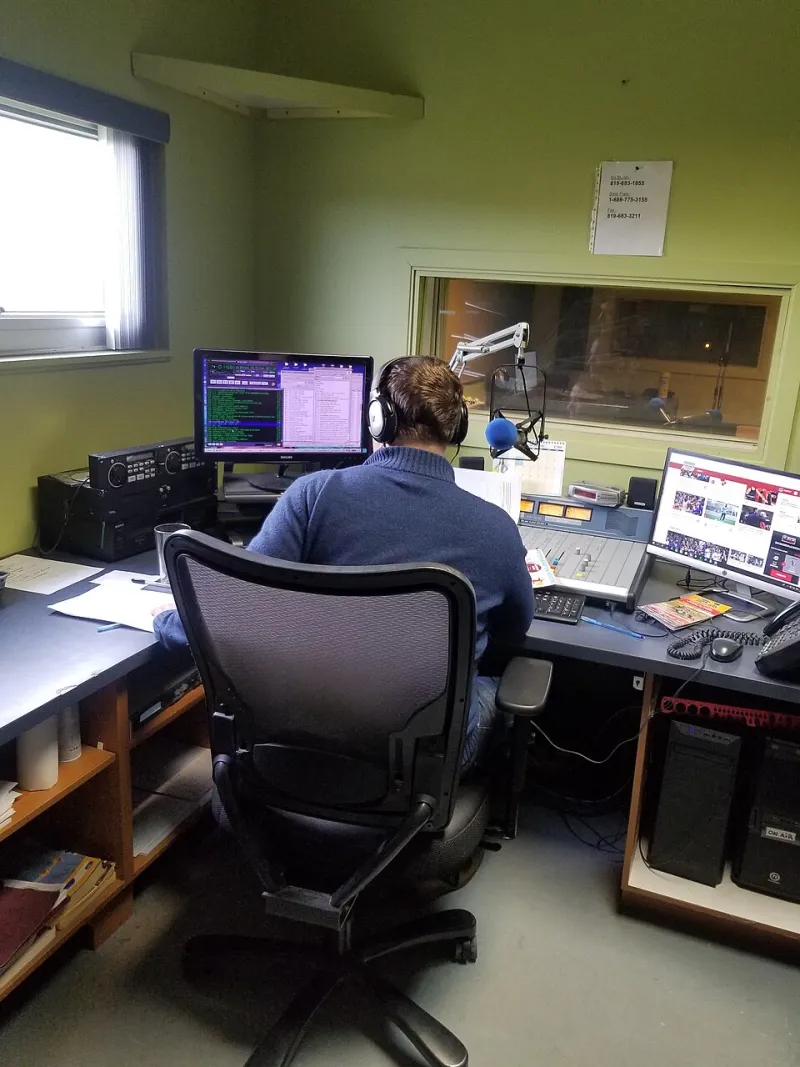
Photo: KarineLLWriter, CC BY-SA 4.0, via Wikimedia Commons
There is a particular sound that tells you you're listening to community radio in West London. It is not the jingle. It is not the playlist. It is the moment a presenter leans away from the mic, coughs like a human being, and then says, slightly too close to the grille, 'Sorry about that.'
That is the sound of a station with its shoes off. And in 2026, as more local broadcasters tidy up their output, chase sponsors and learn to sound like the big boys, it is a sound worth defending.
The polish problem
Nobody is arguing for chaos. A station that cannot be heard, cannot be found, or cannot get its levels right is not charming — it is frustrating. But there is a difference between technical competence and the kind of glossy, airbrushed radio that could have been recorded anywhere. The best community stations in Ealing, Brentford, Southall and Shepherd's Bush have always understood that. They know their listeners are not tuning in for perfection. They are tuning in for proximity.
When a volunteer fumbles a handover or reads out the wrong bus route, you are reminded that the person speaking is not a format. They are someone who probably drove in past the roadworks on the Uxbridge Road, parked badly, and brought a flask. That is not a flaw in the programme. It is the programme's whole personality.
A cough is a calling card
Listen closely to a local phone-in or a Saturday morning music show and you will hear the small tells of a real room: a chair creaking, a mug going down on a desk, a whispered 'is this on?' from a guest who has never been in a studio before. These are the bits that podcasts spend thousands trying to fake. Community radio gets them for free.
At FM West we have heard volunteers apologise for a squeaky studio door, mispronounce 'Southall' in three different ways in one link, and accidentally leave a microphone open while discussing the correct pronunciation of 'Chiswick'. None of it made us switch off. If anything, it made us lean in. The on-air mistake is a kind of invitation. It says: this is live, this is local, and nobody has edited out the human bits.
Dead air, live town
Dead air is the one that gets volunteers in trouble. A three-second silence can feel like three hours when you are the one in the chair. But listen to enough West London community radio and you start to recognise dead air for what it often is: a person thinking. A caller has said something unexpected. The next track has not loaded. The presenter is trying to work out whether it is appropriate to mention the closure of a local library and a forthcoming jumble sale in the same breath.
That pause is not empty. It is the sound of a local station working without a script. In a media landscape where so much is pre-recorded, pre-approved and pre-polished, a bit of live hesitation is a public service. It tells you the show is not a product. It is a conversation that happens to have a transmitter attached.
What the listeners actually do
Here is the thing the consultants tend to miss: listeners in West London do not talk about their favourite community shows the way they talk about a Netflix series. They talk about them the way they talk about a neighbour. 'Did you hear the bloke on Tuesday? He completely lost it when the guest started talking about allotments.' 'I love that show, but she always plays the wrong traffic bed.'
The wobbles are the shared reference points. They are what gets repeated at the bus stop, in the launderette, on the group chat. A flawless hour of radio is easy to admire and hard to love. An hour where the presenter accidentally calls the station by the wrong name and then spends two minutes laughing about it is the one you remember on the walk home.
Keep the wobble, mind the wires
None of this is a licence to stop trying. A station should still train its volunteers, label its faders correctly and make sure the emergency stop button is not the one next to the kettle. Professionalism matters. But there is a difference between being professional and being polished within an inch of your life.
As West London's airwaves become more competitive and more curated in 2026, the stations that stand out will not necessarily be the ones with the best idents. They will be the ones that still sound like they are made by people who live here. That means keeping the coughs, the missed cues and the occasional mispronounced road name. It means letting a caller ramble for an extra thirty seconds because they have finally plucked up the courage to speak. It means accepting that dead air is sometimes just a deep breath before the next honest thing.
Bad radio, in the best sense, is not careless radio. It is radio with the edges left on. And in a city that is forever being smoothed over, bought up and tidied away, those edges are worth hanging on to.