Say It With Three Minutes: The Dedication Hours Holding West London Together

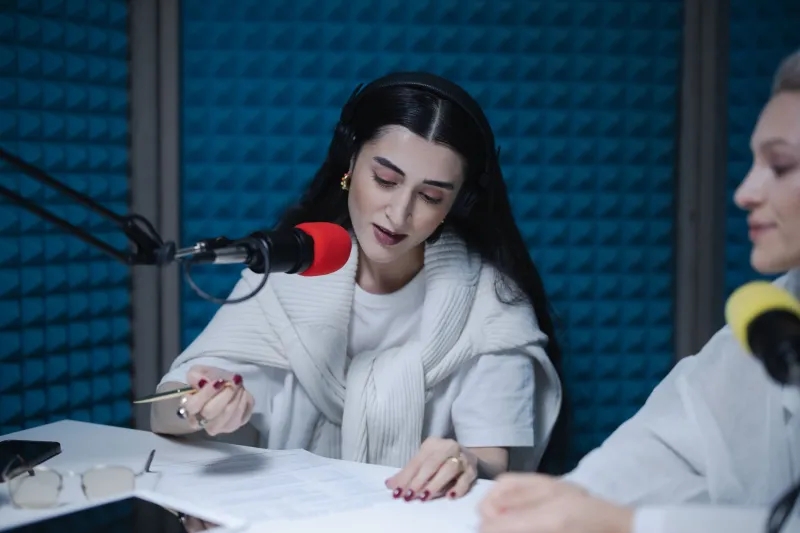
Half past nine on a Tuesday morning and the phone lines at a community station in Hanwell are already warm. Not complaints, not breaking news — a man who wants a bit of lovers rock for his wife of thirty-one years, and who would very much like the presenter to get her name right this time.
By ten past, the same show has run a birthday for a nine-year-old in Southall, a good-luck message for a lad sitting his driving test in Acton, and a tune sent out to an entire terrace off the Uxbridge Road after their bins were finally collected. Nobody is going viral. Nobody is monetising anything. It is, by any reasonable measure, the most local thing on the airwaves all week.
Dedication slots are meant to be a relic, supposedly killed off by the playlist and the algorithm. They are not. They are quietly thriving, and they are doing something that no streaming service has worked out how to replicate.
The strange arithmetic of three minutes
A three-minute record ought to be a small thing. It isn't, because everybody listening knows roughly where it is going. A song sent to a street in Brentford lands differently to a song sent to the country. Half the audience is hearing it as a backdrop and the other half is hearing it as a message, and a decent presenter knows exactly which is which.
The dedication is also cheap. That matters more than people admit. You don't need a ticket, a subscription or a personality. You need a phone, a name and something to say. In a city where the cost of taking part in culture has become genuinely silly, a request line is one of the last free ways to put something of yourself into the air.
And it is unfashionably inefficient. One song, one household, one small apology. That inefficiency is the point. Broadcasting to a handful of postcodes at a time is what local radio is for, and a dedication hour is the purest version of it — a narrowcast dressed up as a request show.
Birthdays, apologies, and the classifieds
The staples never change. Birthdays, obviously. Anniversaries, usually with a wry comment attached. New arrivals, exam results, someone coming home from hospital, someone not coming home at all. Football results get sent out with real feeling, especially around Hayes, Hanwell and Wembley, where a Saturday scoreline can set the emotional weather for a whole weekend.
But the apology slot is the best thing on the radio. A dedication to a sister in Brentford who was right about the parking. A message to a neighbour in Ealing about the fence. Small, public, gentle reconciliations that would look ridiculous on a national station and make perfect sense when both parties live four doors apart. There is a whole genre of West London social repair happening in three-minute bursts, and almost nobody outside the postcode notices.
First dances get requested by people who never got one. So do songs for grandparents, in languages the presenter has to be careful with and gets right anyway. This is a corner of broadcasting where being specific about a person is more valuable than being broad about a demographic.
Where the dedication hours actually live
The good news is that you don't have to hunt hard. Most community stations in the patch build their schedule around exactly this.
Breakfast shows, roughly seven to nine, are the busiest — requests come in overnight and the presenter has a full page before the news at nine. Mid-morning magazine shows, ten to twelve, are where the longer, more conversational dedications land, the ones with a story attached. Drive-time, four to six, is louder and faster, and a good bet if you want a football result read out. Weekend mornings are the sentimental shift, and some stations keep a late-night request hour for the ones that need the dark.
Stations serving Southall and the surrounding wards have run request programmes for decades, often in more than one language, and they remain some of the most-listened-to hours of the week. The same goes for the community stations dotted around Hayes, Ealing, Brent and Hounslow — their schedules are published, their social feeds usually flag when requests are open, and a surprising number now take messages by WhatsApp.
Getting your shout-out on air without clogging the switchboard
A practical guide, from someone who has heard both the best and the most chaotic versions of this.
Time it properly. Lines tend to open shortly before the hour, not the moment the show starts. Ringing at 6.58am for a 9am slot is how you end up in a queue behind forty other people and one very tired producer.
Use the text line if there is one. A WhatsApp or text message is easier to read out accurately than a phone call, and it gives you a second to check your spelling. If the station is volunteer-run, it is also a kindness.
Keep it to twenty-five words. One name, one song, one reason. The dedications that get read are almost always the short ones. The ones that don't get read begin with a paragraph about how you first heard the track in 1994.
Help with pronunciation. Write names as they sound, capitalise the stressed syllable, and don't assume the presenter knows your nan's name is spelled Aisling but said Ash-ling.
Ask for the song, not the album. And don't request the twelve-inch mix unless you are certain it exists in the station's library.
Send date-specific requests a day early. A birthday dedication that arrives at ten past the hour is a birthday dedication that gets read next Tuesday.
Never ring back to check, and never ring back to complain. The producer is a volunteer. There is a queue. Your song is coming.
If it's a football result, wait for the classifieds. They will get there. They always get there.
What goes quiet when the phones stop
There is a version of the future where all of this becomes a playlist with a feedback form, and everyone involved saves about forty minutes a week. It would be a terrible trade. A recommendation engine can guess what you might like. It cannot know that the woman at number fourteen has just come out of hospital, or that two brothers in Hanwell haven't spoken since the spring, or that a nine-year-old in Southall has been waiting all week to hear her own name on the radio.
That needs a switchboard, a patient voice and three minutes of somebody else's song. Long may the lines stay busy.