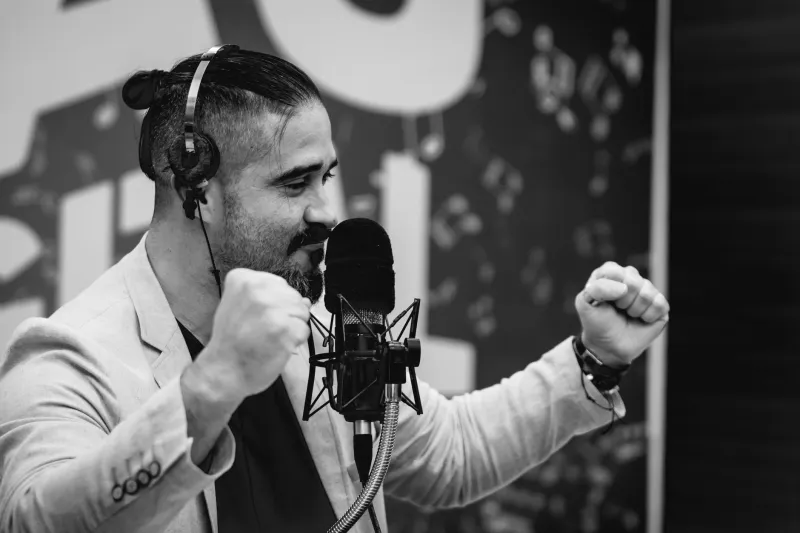
Behind the Counter, Behind the Mic: The Record Shops Running Their Own Radio Hours
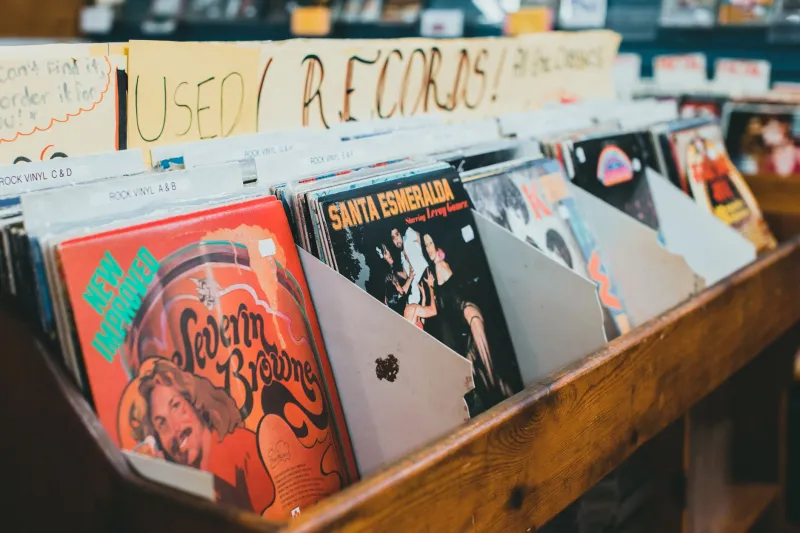
Saturday morning on Ealing Broadway, and the shop has been open six minutes. Nobody is buying anything yet. Two people are flipping through the soul crates, one is asking whether the reggae section has been re-filed, and the person behind the counter is on the phone to a community station three miles away, confirming that yes, they'll be in for the Tuesday night slot as usual.
This is the bit of West London music culture that rarely makes it into the listings. Between the gig venues and the streaming playlists sits a modest circuit of independent record shops that also function as radio outposts — feeding presenters into community stations, hosting shows from the back room, and lending their staff to the airwaves for the price of a thank-you on the way out.
The counter is the studio's front door
Think about what a good record shop actually is. It is a room full of curated sound, presided over by somebody with strong opinions and a decent memory for faces. That is, give or take a mixing desk, the job description of a community radio presenter.
So the crossover makes sense. Shops have the records, the knowledge and the regulars. Community stations have the transmitter, the licence and the endless appetite for volunteers. Put the two together and the counter becomes a broadcast booth that just happens to sell vinyl.
What's striking is how unglamorous it all is. There is no sponsorship banner. Somebody's mate does the show. The training happens on a wet Wednesday and consists largely of learning not to swear near an open mic. It is the least polished end of West London's audio scene, and arguably the most resilient.
Portobello Road: the racks that think like a label
The record shops along Portobello have been supplying DJs, producers and radio people for decades, and the tradition hasn't died — it has just got quieter. Walk in on a Friday and you'll often find somebody compiling a show rather than shopping, pulling a stack of Jamaican pressings or West African reissues with a running order already half-formed in their head.
This is the place to go if you want to hear how a show is built rather than just performed. Ask what's being pulled for the weekend. Ask why. The answer will tell you more about local taste than any chart.
Talbot Road: the front room with a training habit
The shop under the Westway has the feel of a living room that happens to stock records, which is exactly why it works as a radio nursery. Noticeboards, flyers for things that happened three weeks ago, a queue at the till that turns into a conversation about a B-side.
Shops like this one are where first-time presenters get their start — a guest slot, then a joint show, then a name on a schedule. If you are angling for a way into community radio and you don't know anyone, standing at a counter and being pleasant for twenty minutes is still one of the most reliable routes in. It's how a lot of the current crop of West London voices got going.
Southall: Sunday racks and the request line
The Broadway on a Sunday has a rhythm of its own, and the shops that serve it are plugged into local stations in a way that puts most of the industry to shame. Requests get noted down, birthdays get mentioned, and a record bought on Saturday can plausibly be on air by Sunday lunchtime.
Go early if you want the good stuff and the good chat. Go late if you want to hear staff arguing about which version is definitive, which is its own kind of broadcast.
Ealing and Hanwell: the back room with the good acoustics
Several shops across the borough have worked out that the back room is wasted space, and have turned it into a small performance and broadcast area — a couple of mics, a mixer, a sign on the door asking you to keep it down while the red light is on.
In-store sessions streamed or recorded for community stations are increasingly common here. They are worth seeking out precisely because they're small: fifteen people, one artist, a sound that a bigger room would ruin. Follow the shops on social media, because these things are usually announced with about four days' notice and sell out by word of mouth.
What to listen for
You can tell within a minute whether a shop has a radio habit.
The now-playing pile. A stack behind the counter that is clearly being auditioned rather than filed. Someone is planning something.
The microphone. Not hidden away, not treated as a novelty. Just there, with a cable taped down properly.
The language. If staff say things like 'we'll play that on the show' rather than 'that's a good one', you're in the right place.
The calendar. A wall planner with show dates on it, next to the delivery schedule. That's the tell.
The regulars. People who come in, don't buy much, and stay for forty minutes. That's not loitering. That's a community.
When to go, and what to buy
Weekday afternoons are for talking. Staff are less rushed, the shop is emptier, and you can ask about radio volunteering without feeling like you're holding up a queue. Saturday is for browsing and eavesdropping — the best conversations happen between eleven and two, when half the customers seem to know each other.
Buy something. It doesn't have to be expensive. A seven-inch, a compilation, a record you're curious about. Shops remember the people who bought the weird thing, and those are the people who get asked to do a guest spot.
And if you hear a show you like, tell the person behind the counter. They probably know who made it. They may well have trained them.
Why the counter still matters
The relationship between the people who buy records and the voices who play them has been quietly severed by the streaming era. The shop is one of the few places where it survives intact, and where a fifteen-year-old with a good ear and a stack of second-hand soul can end up on the airwaves inside a year.
That's not nostalgia. That's infrastructure. West London has it, mostly unlabelled and mostly unpaid, and it is worth turning up for before somebody decides the back room would make a better stock cupboard.