The Radio Arrives Before the Tarpaulin: A Sunday Morning at West London's Car Boots
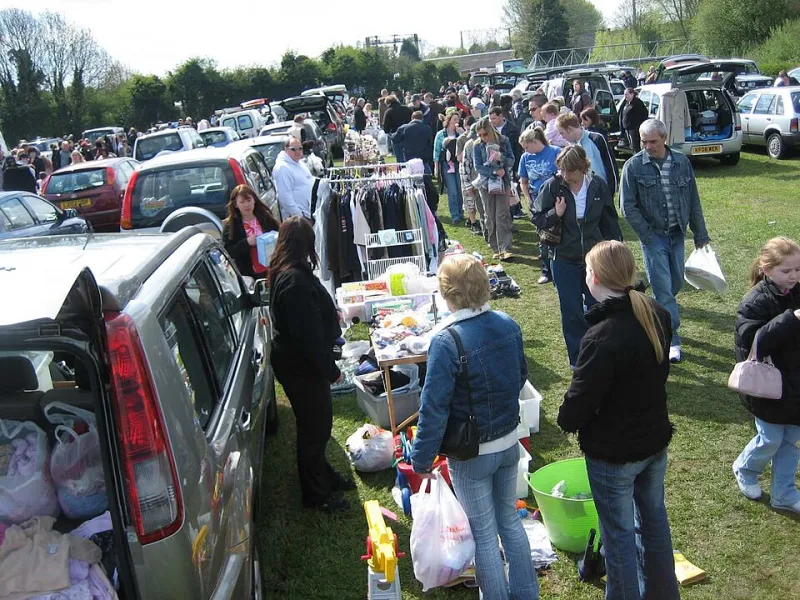
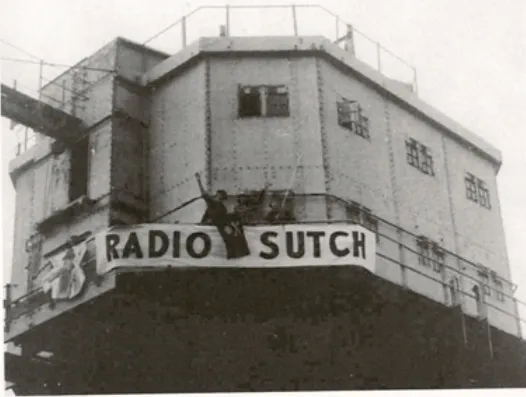
Photo: Mark.murphy at en.wikipedia, Public domain, via Wikimedia Commons
7:20am: The first frequency of the day
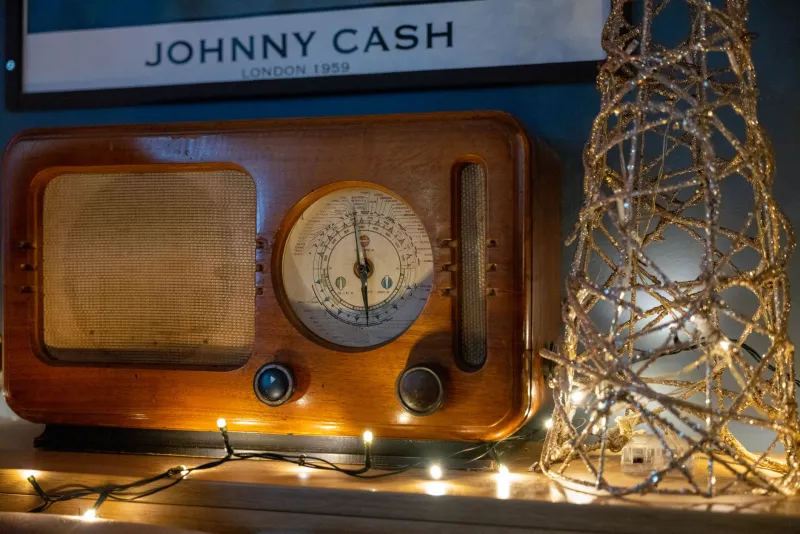
By the time the light has properly decided what it is doing, the car boot sale has already begun. Not the browsing, exactly. The laying out. The quiet bit. A man in a flat cap is arranging second-hand drill bits in lines that suggest he has strong opinions about order. Two stalls down, someone is wedging a portable radio between a box of DVDs and a flask. The aerial goes up. The dial is nudged. A community station comes through with that familiar slightly woolly warmth, half music, half someone reading out a road closure near the A40.
This is the Sunday ritual at car boot sales across West London: the radio arrives before the tarpaulin. It is not a headline event. Nobody has put it on a poster. But it is one of the most honest ways local radio reaches people — not in the kitchen, not in the car, but standing on damp grass with a tenner in your pocket and no particular plan.
The stallholder’s request hour
There is a particular kind of conversation that happens when a radio is on at a boot sale. It is not quite listening. It is more like checking in. A stallholder will pause mid-haggle to say, “Hang on, I like this one,” and nobody minds. A woman selling mismatched crockery will ask whether the station takes requests, then spend five minutes explaining why the song she wants reminds her of a holiday in Southend. The request may never be played. That is beside the point. The asking is the thing.
Community radio here works as a kind of social adhesive. It gives strangers something neutral to talk about before they get to the business of offering £3 for a lamp that was marked £8. It fills the gaps between customers. It makes the early hours feel less like a transaction and more like a shared room with the door left open.
Football scores, shouted across the trestles
Come half-past two, the listening changes. Someone has a phone out. Someone else has a radio pressed to their ear. The football scores start moving around the site faster than any official update. “Two-nil,” a man calls out, not to anyone in particular. A nearby stallholder repeats it. Within a minute, three separate conversations have absorbed the information and moved on.
What is striking is how naturally the radio fits this. It is not demanding attention. It is simply there, offering the same small updates that people are already swapping by voice. A local station that can do that — be useful without being loud — has understood something important about Sunday mornings. People are not sitting down to listen. They are listening while doing something else. That is not a lesser form of attention. It is often a more loyal one.
A temporary listening community
By ten o’clock, the site is properly busy. Prams, dogs, carrier bags, a child negotiating hard for a plastic dinosaur. The radio is still on, though the station has changed on one stall and another has been switched off because the battery went. In the middle of it all, a woman in a fleece hands out tea from a camping stove. Someone asks her if she has heard the noticeboard slot. She has. She says she likes the bit where people read out lost cat descriptions. It is, she says, “like the old days, but with better signal.”
That phrase stays. Car boot sales are full of people who remember when local radio was simply part of the furniture. They are not nostalgic for poor reception or crackly AM. They are nostalgic for the feeling that the voice on the radio belonged to the same place they did. Community stations in West London still offer that, but they have to go where people already are. The boot sale is one of those places: not a concert, not a studio, not a listening party. Just a field or a school playground or a tarmac car park with a radio on a table.
Why it matters beyond the field
For local stations, the temptation is always to chase the listener at home. The kitchen radio is important. So is the car. But Sunday car boot sales offer something else: a captive audience that is not really captive at all. People are there because they want to be. They are relaxed, unhurried and unusually open to conversation. If a station can become the background to that, it has done more than build an audience. It has become part of the ritual.
The practical lessons are not complicated. Be audible. Be useful. Say the name of the place. Read out the things people need to know — the roadworks, the lost dog, the church hall jumble sale. Do not treat the listener as someone sitting in an armchair waiting for a feature. Treat them as someone in a waterproof jacket, holding a cardboard box, wondering whether that lamp is worth a fiver.
The last cup of tea
By midday, the good stuff has gone and the remaining stalls are starting to think about packing up. The radio is still going on one table, playing something mid-tempo while a man counts coins into a Tupperware. A couple nearby are sharing a flask. The morning has not been about any single show or song. It has been about a frequency that turned up early and stayed out of the way.
That is the quiet power of community radio in West London. It does not always need a big moment. Sometimes it just needs to be there before the tarpaulin, ready to fill a Sunday morning with something local, something useful and something just familiar enough to make strangers talk.